






1900s Literature
A Man's Woman (1900)
by Frank NorrisA Man's Woman" by Frank Norris is a novel written in the late 19th century. The story follows Ward Bennett, a commanding figure leading an Arctic exploring expedition who faces the merciless challenges of nature with a group of twelve men. Central to the narrative is Bennett’s internal struggle against the formidable forces of the ice, reflecting themes of survival, leadership, and man's confrontation with the natural world. | Awakening of Helen Richie (1906)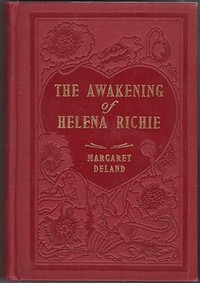
by Margaret DelandHelena Richie leaves a drunken husband, who had killed their child, and goes to Old Chester with her friend Lloyd Pryor. Most believe the newcomers Helena and Lloyd are brother and sister, and Helena adopts a homeless boy, David, who had been a ward of the town's minister, Dr. Lavendar. | Freckles (1904)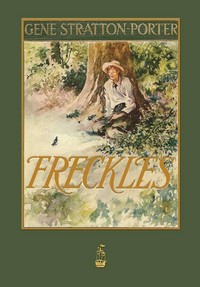
by Gene Stratton PorterThe hero is an adult orphan, just under twenty years of age, with bright red hair and a freckled complexion. His right hand is missing at the wrist, and has been since before he can remember. Raised since infancy in a Chicago orphanage, he speaks with a slight Irish accent, "scarcely definite enough to be called a brogue." | A Girl of the Limberlost (1909)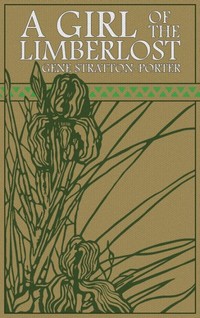
by Gene Stratton PorterThe novel is set in Indiana. Most of the action takes place either in or around the Limberlost, or in the nearby, fictional town of Onabasha. The novel's heroine, Elnora Comstock, is an impoverished young woman who lives with her widowed mother, Katharine Comstock, on the edge of the Limberlost. Elnora faces cold neglect by her mother, a woman who feels ruined by the death of her husband, Robert Comstock, who drowned in quicksand in the swamp. |
The House of Mirth (1905)
by Edith WhartonThe House of Mirth tells the story of Lily Bart, a well-born but impoverished woman belonging to New York City's high society around the turn of the last century. | The Jungle (1906)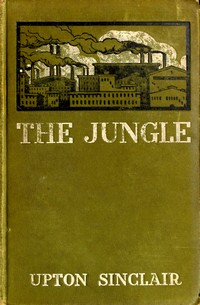
by Upton SinclairThe Jungle is a 1906 novel written by journalist, socialist, and politician Upton Sinclair.Sinclair wrote the novel with the intent to portray the lives of immigrants in the United States. However, readers were more concerned with the large portion of the book pertaining to the bad practices and corruption of the American meatpacking industry during the early 20th century, and the book is now often interpreted and taught as a journalist's account of the poor working conditions in the industry. | A Little Princess (1905)
by Frances Hodgson BurnettA Little Princess by Frances Hodgson Burnett is a children's novel written during the late 19th century. The story follows the life of Sara Crewe, a young girl who is sent to a boarding school in London after her father goes to work in India, and explores themes of wealth, loss, and resilience in the face of adversity. | Little Shepherd of Kingdom Come (1903)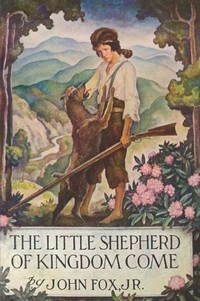
by John Fox JrThis is a story of Kentucky, in a settlement known as Kingdom Come. It is a life rude, semi-barbarous; but natural and honest, from which often springs the flower of civilization.Chad, the little shepherd did not know who he was nor whence he came he had just wandered from door to door since early childhood, seeking shelter with kindly mountaineers who gladly fathered and mothered this waif about whom there was such a mystery a charming waif, by the way, who could play the banjo better that anyone else in the mountains. |
Mrs Wiggs of the Cabbage Patch (1902)
by Alice Caldwell HeganMrs. Wiggs of the Cabbage Patch is a 1901 novel by American author Alice Caldwell Hegan, telling of a southern family's humorously coping with poverty. The book was highly popular on its release and has been adapted to film several times. | The Right of Way (1901)
by Gilbert ParkerCharley Steele, a Canadian lawyer, goes missing and is though dead by everyone. Seeing an opportunity to changes his life, he adopts a new name. | A Room With a View (1908)
by EM ForsterA Room with a View by E. M. Forster is a novel written during the early 20th century, which explores themes of social conventions and personal freedom. Set primarily in Italy and England, the narrative follows the journey of Lucy Honeychurch, a young woman navigating her feelings about love, societal expectations, and her own desires against the backdrop of her experiences abroad. | The Shuttle (1907)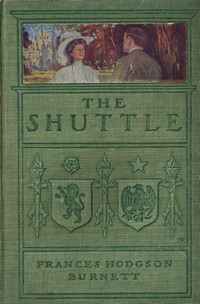
by Frances Hodgson BurnettOne of Burnett's longer and more complicated books for adults, it deals with themes of intermarriages between wealthy American heiresses and impoverished British nobles. |
Sister Carrie (1900)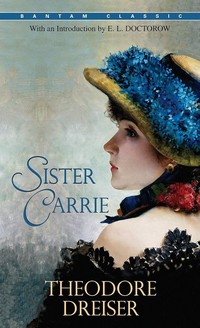
by Theodore DreiserSister Carrie is a novel by Theodore Dreiser about a young country girl who moves to the big city where she starts realizing her own American Dream, first as a mistress to men that she perceives as superior, and later becoming a famous actress. It has been called the greatest of all American urban novels. | The Story of My Life (1903)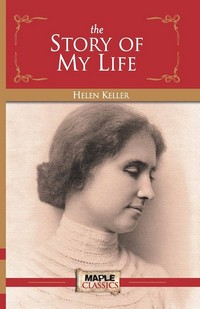
by Helen KellerThe Story of My Life by Helen Keller is an autobiographical account written during the late 19th century. This profound narrative details her experiences as a deaf and blind child, chronicling her struggles and triumphs as she transitions from a world of isolation into one filled with knowledge and communication through the loving guidance of her teacher, Anne Sullivan. | Three Men on the Bummel (1900)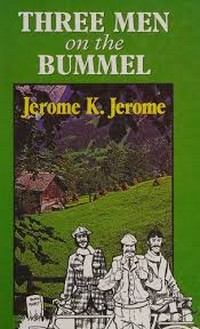
by Jerome K JeromeA humorous novel by Jerome K. Jerome. It was published in 1900, eleven years after his most famous work, Three Men in a Boat. The sequel brings back the three companions who figured in Three Men in a Boat, this time on a bicycle tour through the German Black Forest. | Trail of the Lonesome Pine (1908)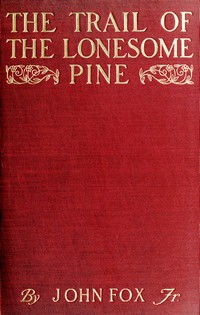
by John Fox JrSet in the Appalachian Mountains at the turn of the twentieth century, a feud has been boiling for over thirty years between two influential mountain families: the Tollivers and the Falins. The character Devil Judd Tolliver, in the novel was based on the real life of Devil John Wesley Wright, a United States Marshal for the region in and around Wise County, Virginia, and Letcher County, Kentucky. The outside world and industrialization, however, are beginning to enter the area. Coal mining begins to exert its influence on the area, despite the two families feuds |
Unleavened Bread (1900)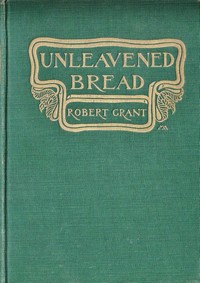
by Robert GrantThis turn of the century American novel is an ambitious three-stage portrayal of a woman's rise from rural schoolteacher to Senator's wife | The Virginian (1902)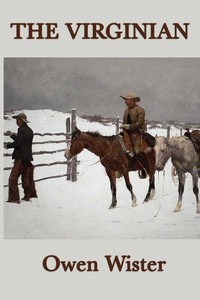
by Owen WisterIt describes the life of a cowboy on a cattle ranch in Wyoming and was the first true fictional western ever written, aside from short stories and pulp dime novels. The Virginian paved the way for many more westerns by such authors as Zane Grey, Louis L'Amour, and several others. | Wonderful Wizard of Oz (1900)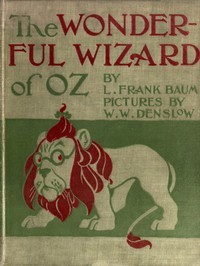
by L Frank BaumDorothy is a young orphaned girl raised by her Uncle Henry and Aunt Em in the bleak landscape of a Kansas farm. She has a little black dog Toto, who is her sole source of happiness on the dry, gray prairies. One day the farmhouse, with Dorothy and Toto inside, is caught up in a cyclone and deposited in a field in Munchkin Country, the eastern quadrant of the Land of Oz. The falling house kills the evil ruler of the Munchkins, the Wicked Witch of the East. |